The conditions for failure
Ambiguous ownership, poor incentives, weak evidence, and decisions made too far from the people affected.
Stories from the front lines of system failure.
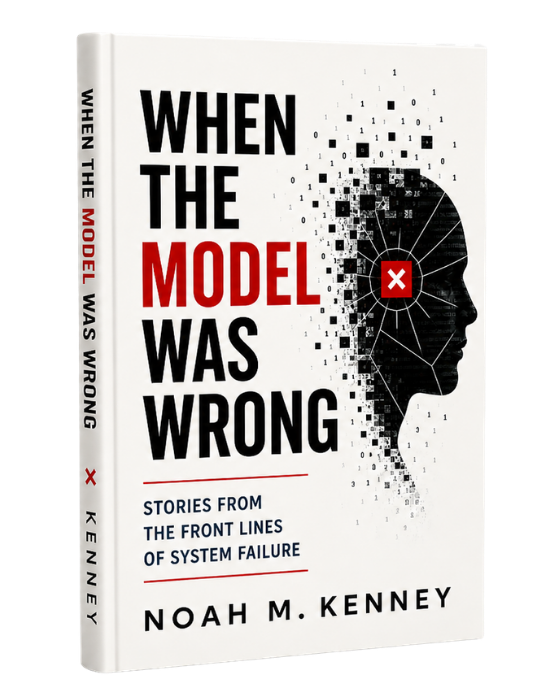
A case-led account of what happens when automated systems meet institutional blind spots.
When the Model Was Wrong reconstructs consequential failures and follows responsibility beyond the model itself: into incentives, data, procurement, organizational design, oversight, and the decisions people made before and after deployment.
Written for executives, boards, practitioners, students, and readers who want to understand not only how systems fail, but why institutions repeatedly fail to see it coming.
Reader testimonial
“I think this is the most readable book about AI governance you could ever hope to find.”
“This book is the closest to a comprehensive technical blueprint for governing complex AI systems that I have found.”
“I’ve not read anything that explains and precisely points out the challenges with complex, interconnected, and automated decision making systems like this book.”
Ambiguous ownership, poor incentives, weak evidence, and decisions made too far from the people affected.
What the failure looked like in practice, who saw it first, and why intervention came too late.
How organizations explain, investigate, contain, and sometimes misunderstand what happened.
The governance, design, oversight, and escalation choices that make a different outcome possible.