Direction and ownership
Define who decides, who challenges, and who remains accountable.

Three books for the people responsible for governing intelligent systems: a foundational textbook, a role-based practitioner’s manual, and a case-led account of system failure.
Explore the books ↓Governing Intelligence establishes the architecture. The AI Governance Practitioner’s Manual puts it to work by role. When the Model Was Wrong shows what institutional failure looks like in practice.
Law, privacy, security, and compliance in the age of artificial intelligence.
A field guide for turning broad commitments into ownership, controls, evidence, and repeatable decisions across the AI lifecycle. Written for practitioners who need to connect the boardroom, legal function, technical teams, vendors, and day-to-day operations.
The book follows governance from institutional mandate to operational evidence, showing how every layer must connect if accountability is going to hold.
Define who decides, who challenges, and who remains accountable.
Translate obligations into decisions teams can consistently make.
Govern the full chain, including dependencies outside the enterprise.
Create evidence that governance works under real operating pressure.
Keep the system responsive as risks, uses, and rules change.
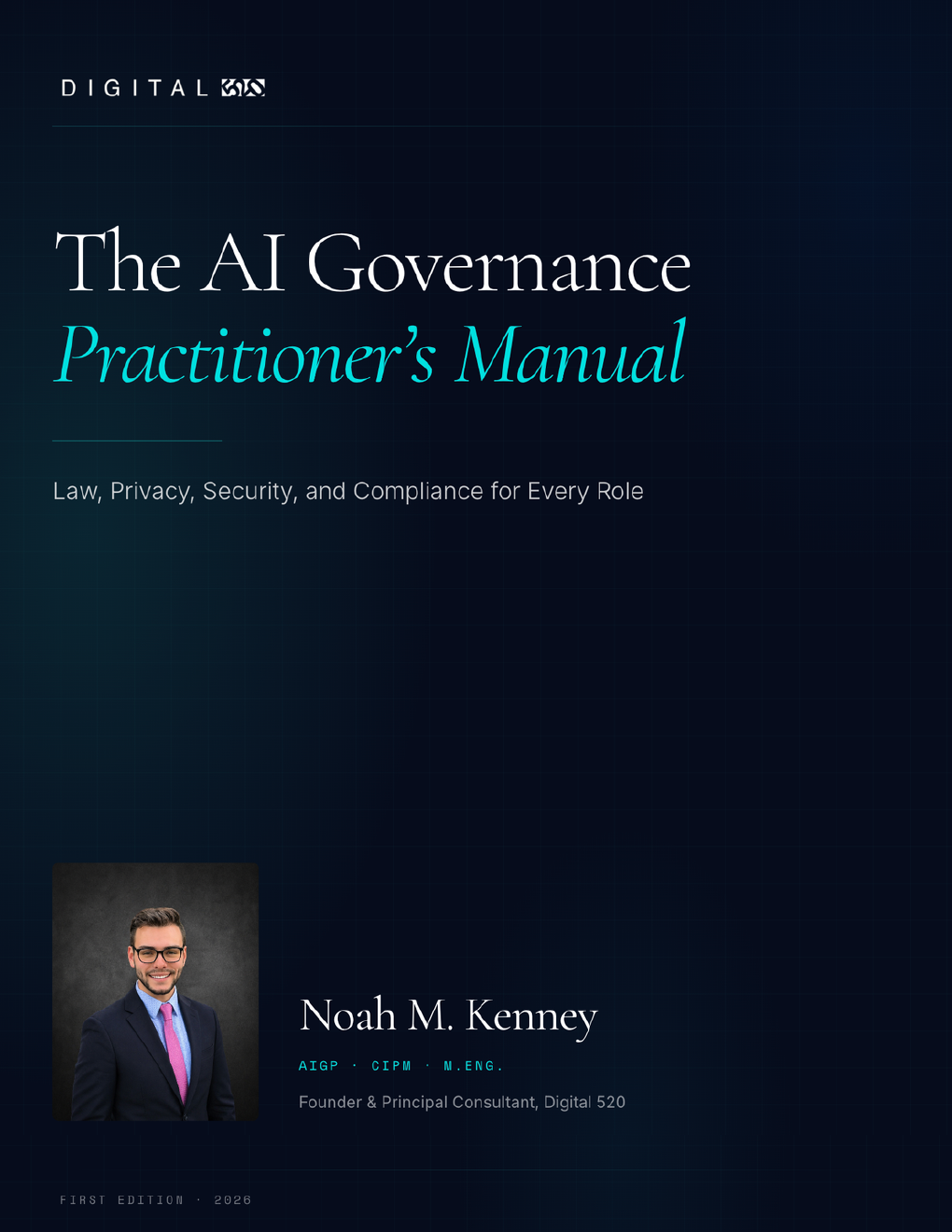 46 chapters
Law, privacy, security, and compliance for every role.
A complete manual to ground a governance program in, with dedicated sections for lawyers, governance leaders, privacy professionals, engineers, security professionals, auditors, product leaders, and executives.
Stories from the front lines of system failure.
A case-led examination of moments when automated systems failed in public, harmed real people, or revealed the distance between technical capability and institutional accountability. Built to be readable in the boardroom and useful in the classroom.
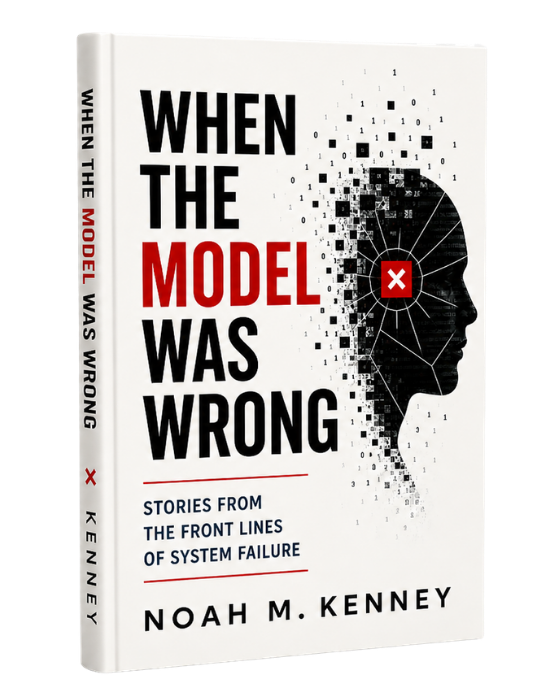 Case-led